What Is Aquaplaning & How Do Tyres Help Prevent It?
Published on: Monday, 20 April 2026 | Author: Jessica Bird
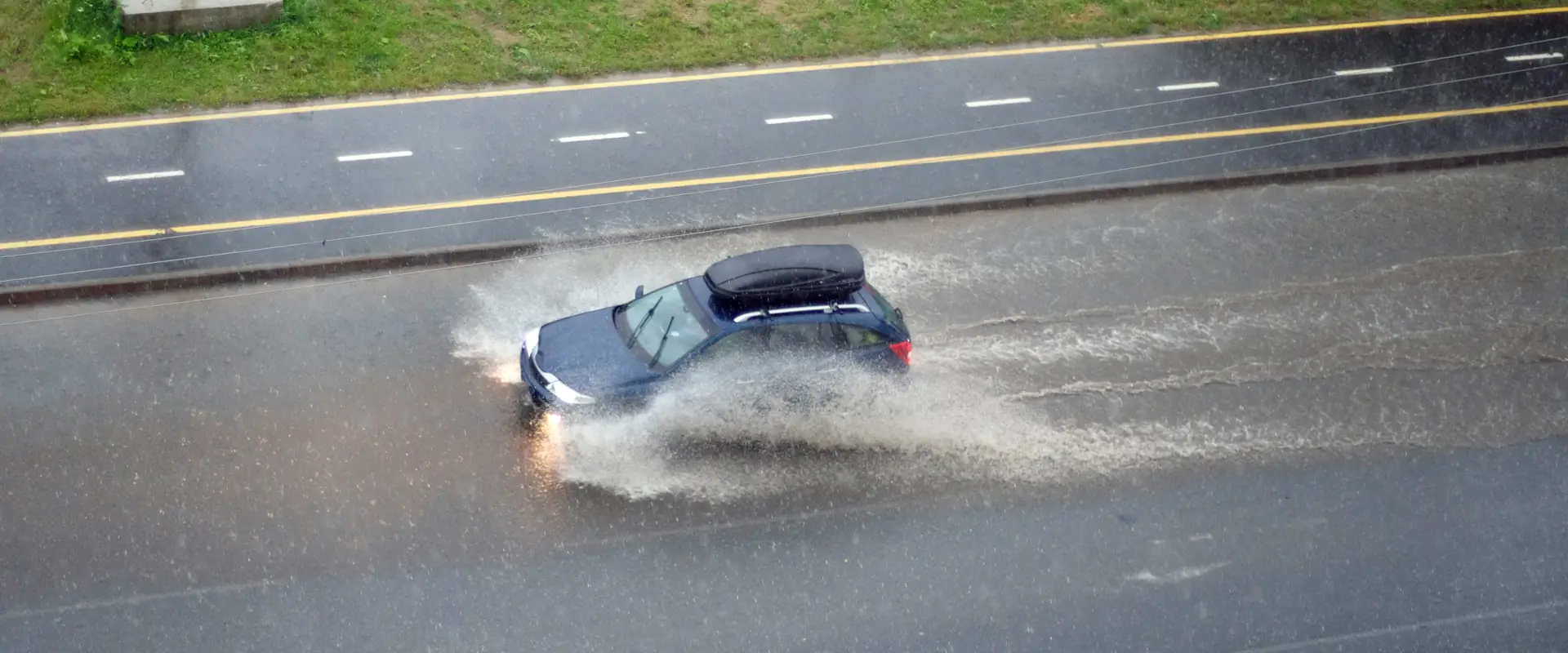
When you’re driving in wet weather where road surfaces are often slippery, slower speeds and more controlled vehicle handling are essential.
After it’s been raining, roads have much less grip for tyres, which increases the risk of skidding or, in some scenarios, ‘aquaplaning’.
Read on to find out what aquaplaning is, what to do if your car experiences it, and tips for preventing it from happening in future.
| What is it? | How to prevent it | How to respond |
|---|---|---|
| When surface water forms a layer between the road and a car’s tyres, causing skidding. | Reduce speeds, maintain tyre tread depth, and avoid sudden braking. | Stay calm, steer straight, ease off the accelerator until you can feel traction again, don’t brake suddenly. |
Aquaplaning explained
Aquaplaning is a phenomenon that occurs when a layer of water on the surface of a road prevents a car’s tyres from being able to grip, causing skidding.
After rain has fallen (or flooding has occurred), excess water is often left standing on the surface of roads before it drains away. In these conditions, it becomes much harder for tyres to successfully maintain traction and grip the surface of the road. This is what causes a vehicle to ‘aquaplane’.
'Aquaplaning' or 'hydroplaning'
You may see this phenomenon referred to as ‘hydroplaning’, but they mean exactly the same thing. Typically, ‘aquaplaning’ is the more common term used in the UK.
What happens to your car during aquaplaning?
When aquaplaning happens, drivers can sometimes lose the ability to steer, brake, or accelerate, as the car’s tyres can’t disperse the water quickly enough. Your car may suddenly feel much ‘lighter’, especially the steering.
The car may start skidding or drifting across the surface of the road, moving from side to side in an action called “fishtailing”. You may also hear the engine rev suddenly as the tyres spin without resistance.
Why does aquaplaning occur?
Aquaplaning happens when drivers approach wet road surfaces at high speeds. If the standing water is especially deep and a car’s tyre treads are especially shallow (below the legal limit of 1.6mm), aquaplaning is even more likely to happen.
- High speed. The quicker a car is moving, the less time there is for its tyres to dispel water (channelling it out of the way of the tread for grip).
- Worn tyres. Tyres that have been worn down have much shallower tread depths, making them far less effective at removing water, too.
- Deep standing water. Runoff water from flooring or large puddles are often too deep for tyres to maintain traction while passing through, especially when travelling at speed.
It's all in the tread: how tyres avoid aquaplaning
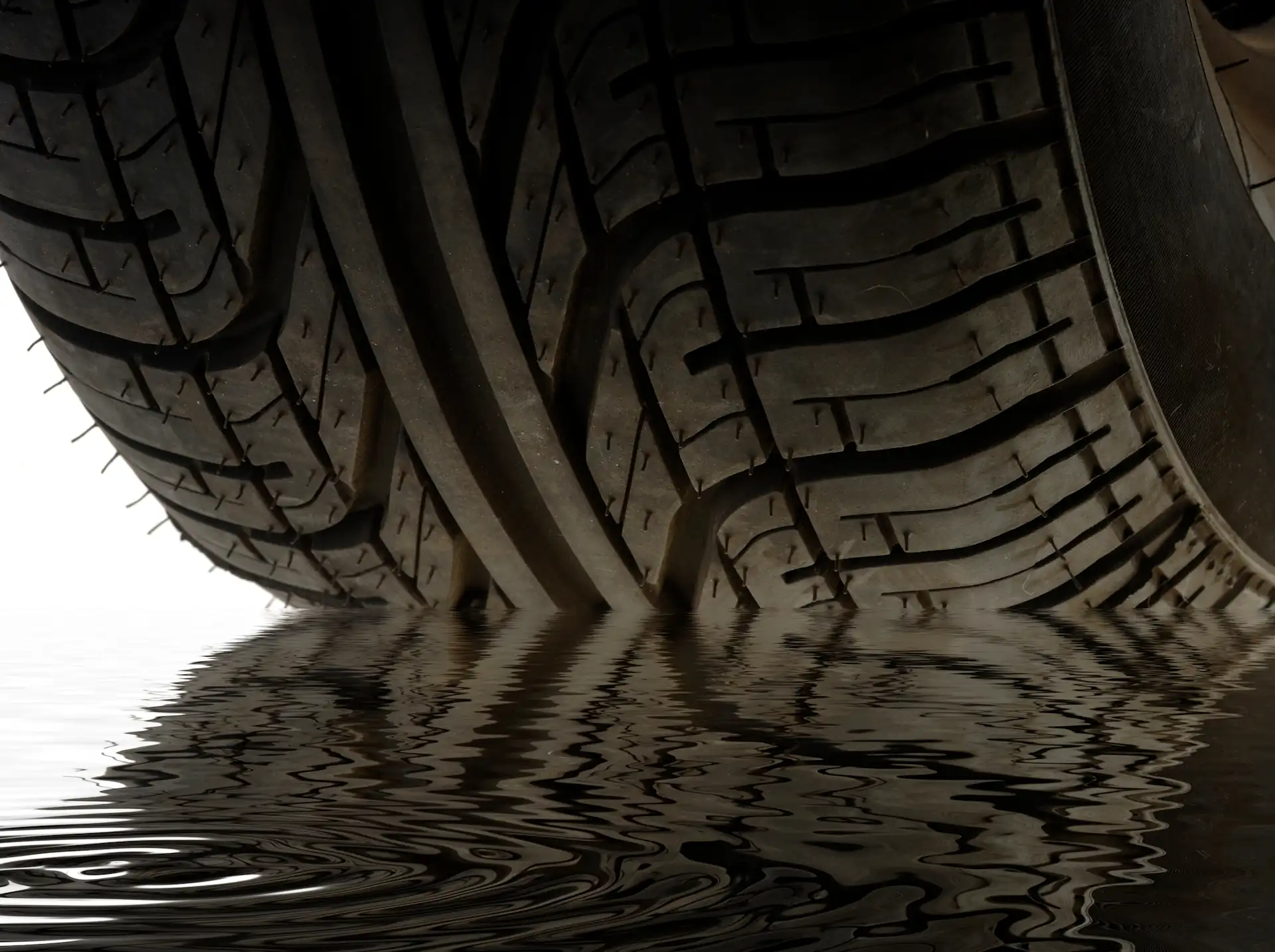
Car tyres are uniquely designed with particular tread patterns, which are there for more than just decorative purposes.
Your tyre tread is designed to act as continuous draining channels while your car moves through surface water. The shapes made by the tread consist of raised areas (for grip) and grooves (for moving water away). Acting a bit like a pump, tyre tread aims to keep the raised sections of the tyre in constant contact with the road for maximum traction with the tarmac.
- Worn-down tyres with shallower tread cannot do this job as effectively, and significantly increase the risk of aquaplaning - just as they reduce braking capabilities on dry road conditions.
- Wider tyres with deeper, newer, specifically designed tread patterns (often in a ‘V’ shape) are much more effective to channel water away from the path of the vehicle.
How do you prevent aquaplaning?
To prevent your car from aquaplaning, there are several good habits to get into when driving in wet weather.
- If it’s been raining, always look ahead for standing water on the road in front of you. This will give you some time to react and adjust your driving behaviour accordingly.
- Keep on top of your tyre maintenance. Make sure your tyres are correctly inflated and that their tread depth is never below the legal minimum of 1.6mm. Slow down. Drop your speed if you notice a puddle or flooded area on the road ahead. Even reducing by a few mph can make all the difference and help avoid an emergency.
- Avoid sudden braking or swerving. Reacting suddenly to standing water is sometimes the worst thing you can do, and may trigger aquaplaning, as brakes can lock up.
- Stay in line. If rainfall is really heavy or there’s a lot of surface water, make things easier for your tyres by lining up with the ‘track’ left behind by the car ahead. This is the part of the road with the least amount of water, as their tyres have already been working to channel water away.
How should you react to aquaplaning?
Aquaplaning happens, but not often. For newer drivers, especially, it can be an overwhelming experience. So, it’s important to stay calm and not react with sudden knee-jerk actions, as this can make the situation worse.
If your car aquaplanes:
| Do | Don't |
|---|---|
| Stay calm and gently ease off the accelerator. Allow the car to slow down naturally. Keep your steering as straight as possible. Keep the clutch down (if driving a manual) to prevent the engine locking up. Deactivate any cruise control features if on. |
Try to brake suddenly. Try to accelerate through the standing water. Make sudden, panicked jerks or turns with the steering wheel. |
As the car begins to slow down on its own, you should eventually feel the grip with the road surface again. At this point, you should apply your brakes gently to bring your speed down further and regain control of the vehicle.
Help you tyres help you
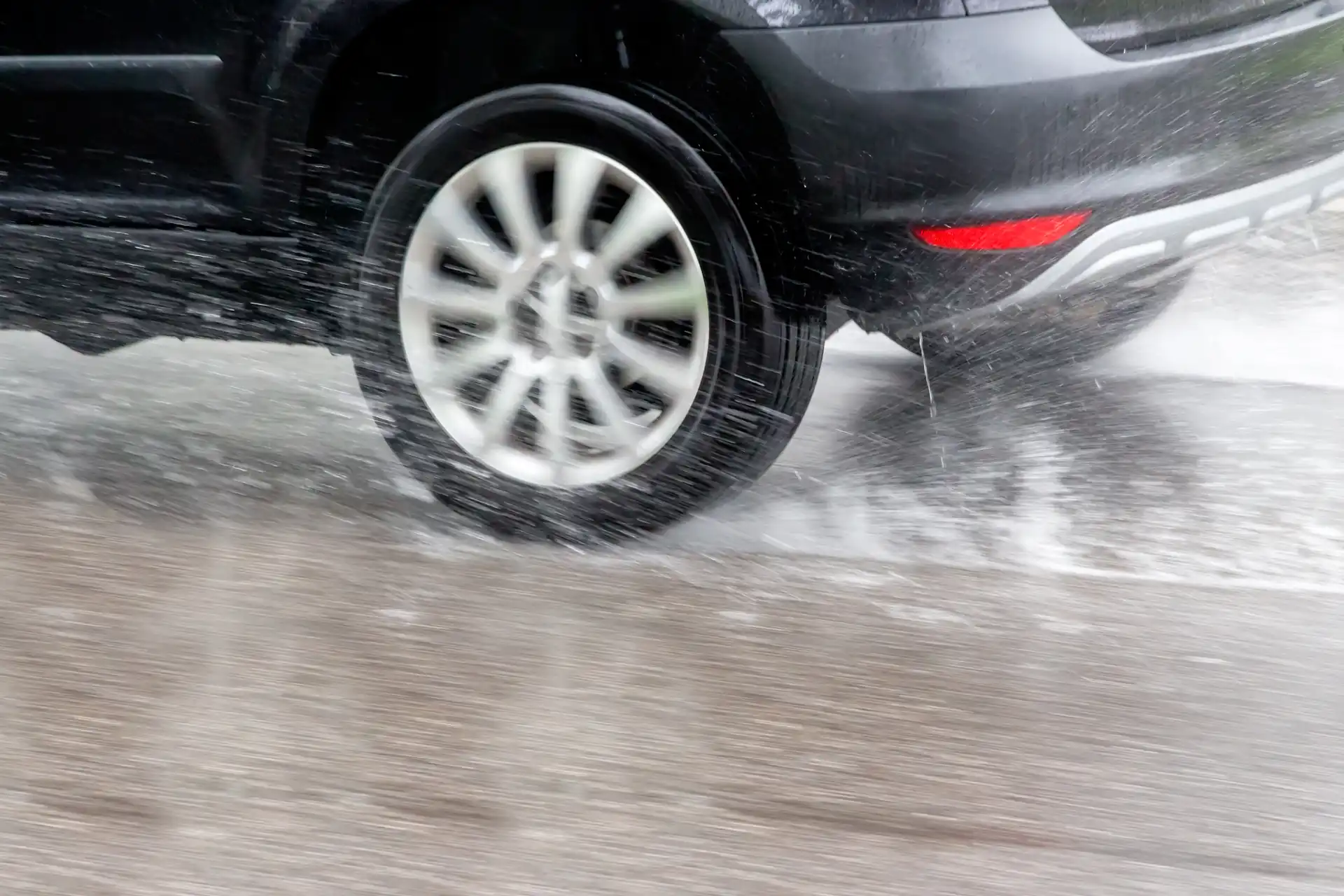
In wet road conditions, your tyres have to do a lot of heavy lifting, pushing water out of their path at a rapid rate. Give them a helping hand by keeping on top of your tyre maintenance.
Book a free tyre check at Tyre Pros for peace of mind and make sure you book in for regular servicing to ensure all elements of your car are working as they should.
For more driving safety tips, read Tyre Pros’ Advice articles.