How Long Does It Take To Charge An EV?
Published on: Monday, 22 December 2025 | Author: Jessica Bird
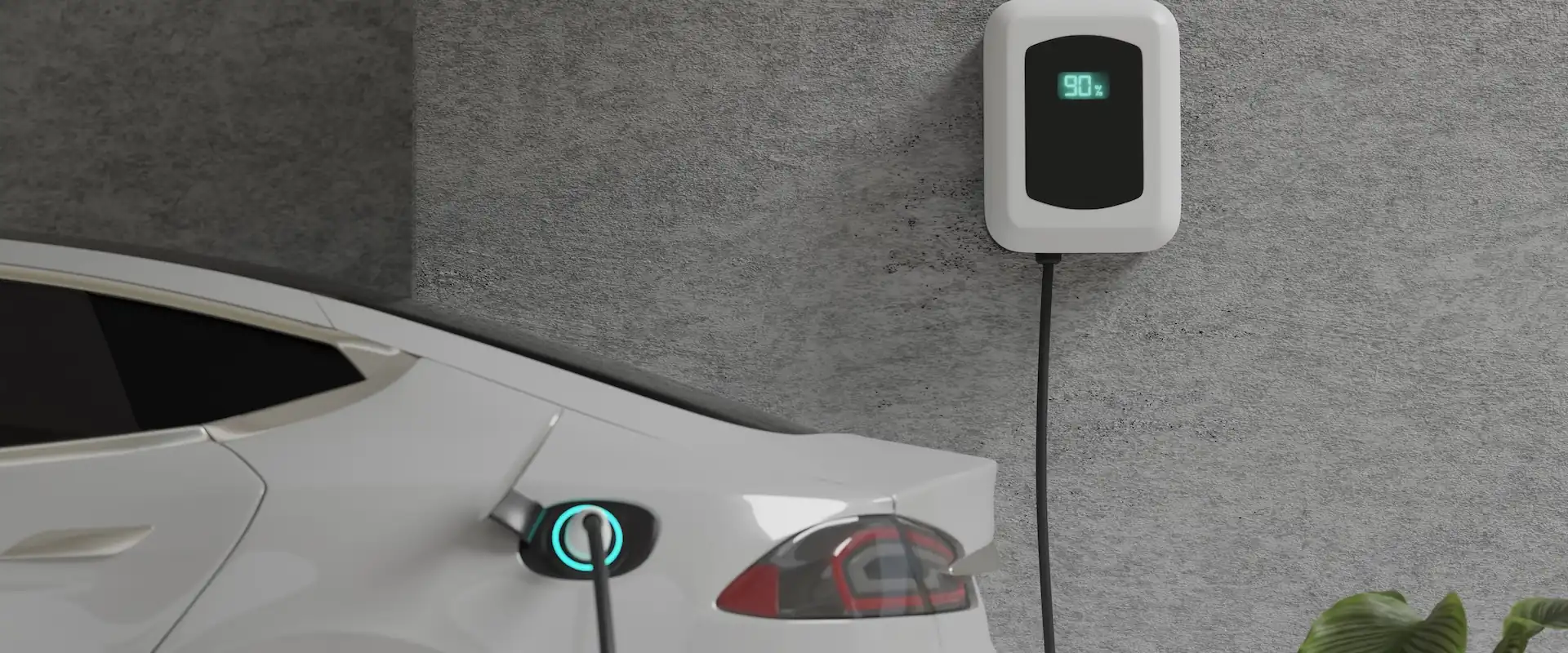
If you’re thinking about making the switch to an electric vehicle, or you’ve just bought one, one of the first things people experience is a thing known as “range anxiety”. In other words: so I don’t get stranded, how long does it actually take to charge an EV?
Unlike filling up a petrol or diesel car, EV charging times can vary quite a bit. They depend on the type of charger you’re using, the size of the battery, the vehicle’s maximum charging capability, and even the weather.
Filling a petrol or diesel car is a case of simple physics (how much fluid can be pumped in a minute), but charging an EV battery is a considerably more complex technological challenge because… well, maybe you don’t need a full physics lesson.
The short reason is that increasing the amount of electricity supplied increases the amount of heat generated as a waste process. Once you get to a certain point, you risk damaging components and starting fires.
But there have been some real advancements made in EV charging tech in the last few years. So it’s now largely a case of understanding what’s available and how you can work with it. Once you understand these basics, planning your charging routine becomes second nature.
So, here’s everything you need to know about EV charging times.
Understanding EV battery sizes
Before talking about charging speeds, it’s worth understanding how battery size comes into play. EV battery capacity is measured in a unit called “kilowatt hours” (kWh). Generally, the larger the battery, the longer it takes to charge.
To give you a sense of scale:
- Small city EVs often have batteries between 30–45 kWh
- Mid-range models typically sit around 50–70 kWh
- Larger SUVs and long-range EVs may have 75–100 kWh or more.
A car with a 40 kWh battery will naturally charge faster than one with an 80 kWh battery – even when plugged into the same charger – simply because it has less energy to store.
The different types of EV charges in the UK
Charging speeds vary hugely depending on the charger you use. In the UK, chargers generally fall into three categories: slow, fast, and rapid/ultra-rapid.
Let’s look at each one.
1. Slow chargers (Up to 3 kW)
Slow chargers are most commonly found at home and usually involve either a standard three-pin plug or a basic home charging unit. They’re the least powerful option available, but they can still be perfectly practical for overnight charging when you’re not in a rush.
For a small-to-medium EV, a full charge typically takes around eight to twelve hours, while larger battery vehicles can take up to twenty-four hours when relying on a standard three-pin plug.
Low-wattage chargers are quickly becoming outdated, however, and are now largely a hanger-on from the early days of EV ownership.
2. Fast chargers (7 kW to 22 kW)
Fast chargers are now the most popular option for home and workplace charging across the UK. A dedicated 7 kW wallbox is often the preferred choice for EV owners, and you’ll also find these chargers in many public car parks, leisure centres, and retail parks.
With a 7 kW home charger, most EVs can be fully charged in roughly six to eight hours, making it ideal for overnight use. Some public chargers offer 22 kW AC charging, which can reduce charging time to around three to four hours, although not all vehicles are equipped to take full advantage of this higher rate.
For everyday use, a 7 kW wallbox tends to offer the best balance of speed, convenience, and affordability, and many drivers also benefit from cheaper off-peak electricity tariffs when charging at home.
3. Rapid and Ultra-Rapid chargers (50 kW to 350 kW)
Rapid and ultra-rapid chargers are typically found at motorway services and modern charging hubs, and they’re designed to get you back on the road as quickly as possible. A 50 kW rapid charger can usually take an EV to around 80% in twenty to sixty minutes, while 100–150 kW units often manage the same in fifteen to thirty minutes.
The fastest ultra-rapid chargers, delivering between 300 and 350 kW, can add a significant amount of range in as little as ten to twenty minutes for vehicles capable of accepting such high power. It’s worth noting that most EVs automatically slow their charging rate once they reach about 80%, which helps protect the battery and prolong its lifespan.
It’s also worth noting that not every car can use the highest-powered chargers, so charging speeds will always depend partly on your vehicle’s own limits as well as the charger you plug into.
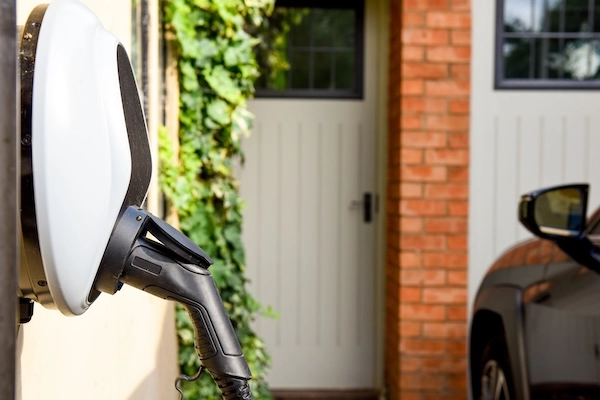
How battery level affects charging over time
One of the most common misconceptions among new EV owners is that charging time is linear (in the same way that a petrol tank fills up at the same, consistent rate). But, as mentioned above, it isn’t. EVs charge fastest when the battery is between 10–50%, then slow down significantly after around 80%.
This is why rapid charging is ideal for quick top-ups rather than filling the battery from empty to 100%. For daily driving, many owners simply keep their EV between 20% and 80%, which helps preserve battery life and keeps charging times short.
Other factors that affect charging time
While charger type and battery size are the biggest variables, several smaller factors can influence charging speed:
Temperature
Batteries work best at moderate temperatures. Extreme cold can slow charging considerably - which is, of course, a familiar issue for UK drivers in winter.
State of charge
Charging from 20% to 50% is much faster than charging from 80% to 100%
Vehicle charging limitations
Every EV has a maximum charging rate. Even if you plug into a 150 kW charger, your car may only be able to accept 80 kW, for example.
Battery condition
As a battery ages, charging speeds and efficiency can reduce slightly.
The future of EV Charging in the UK
While all these numbers may seem overwhelming and, in some cases, may put you off making the leap to an EV, the key thing to keep in mind is that infrastructure across the UK is improving rapidly. More ultra-rapid charging hubs are being installed on a daily basis, home chargers are becoming smarter, and battery technology continues to advance.
So, as EV technology matures, charging times will keep falling. And, in fact, many of the latest models already support faster DC charging than earlier generations, and future solid-state batteries promise even quicker, safer charging.
For now, understanding your car’s behaviour and planning charging around your lifestyle is the best way to make EV driving smooth and stress-free.
Keep your EV running smoothly with Tyre Pros
Whether you drive an EV, hybrid, petrol, or diesel car, regular maintenance is essential for keeping it safe, reliable, and running efficiently. From tyre checks and wheel alignments to MOTs and full vehicle servicing, your local Tyre Pros centre is here to help.
Book your EV-friendly service or MOT with Tyre Pros today and keep your car performing at its best – mile after mile.